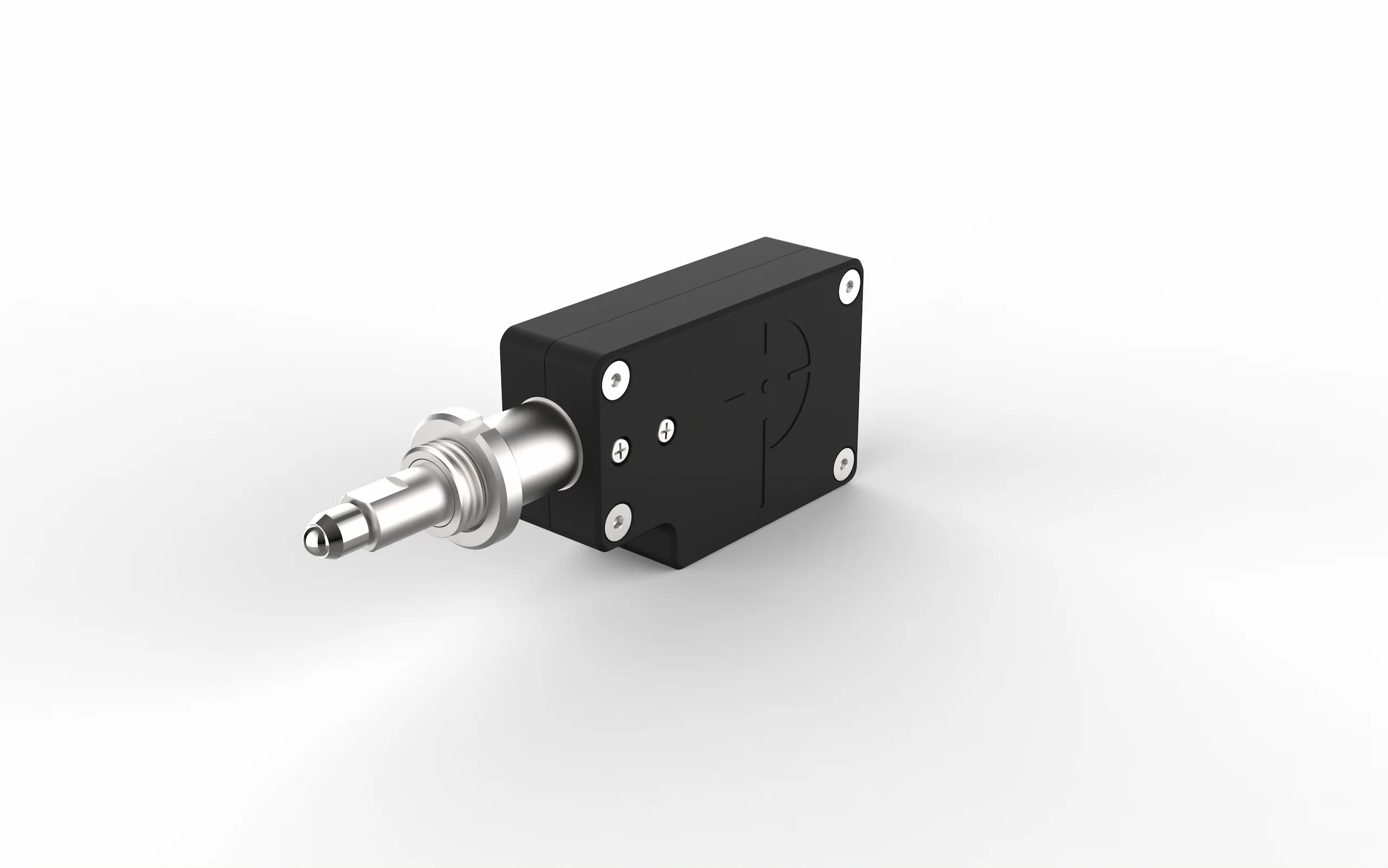
Standard
GO Linear Actuator
For ambient and standard laboratory environments
- Model
- GO-ACT1
- Connection
- 2 m cable to controller
PRECIBEO GO linear actuators
Nanometer-scale adjustment. Powerful linear motion.
Bring precise motorized adjustment to your instrument, optical mount or positioning mechanism. PRECIBEO GO precision linear actuators combine 9 mm travel, 2 nm sensor resolution and minimum incremental motion with 10 N operating force.
9 mm
Linear travel
2 nm
Sensor resolution and minimum incremental motion
10 N
Minimum operating and power-off holding force
8 mm/s
Maximum no-load speed
10⁻⁴ Pa
High-vacuum option
Choose your environment
Both versions provide the same 9 mm travel, positioning performance, force, speed, dimensions and mounting interfaces. Select the construction and cabling for your operating environment.
Standard
For ambient and standard laboratory environments
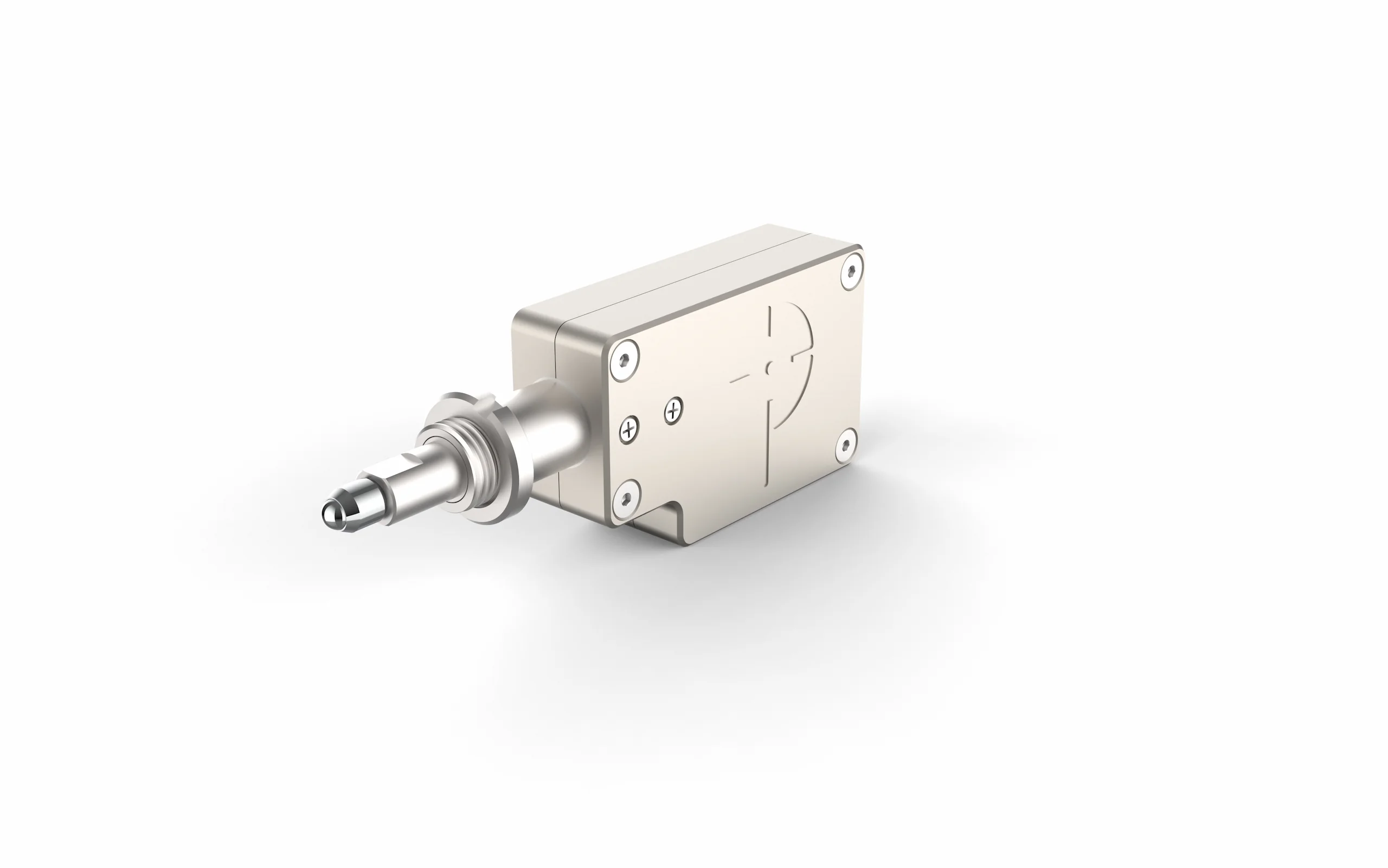
High vacuum
For high-vacuum systems down to 10⁻⁴ Pa
Piezoelectric walking drive
A piezoelectric actuator converts electrically induced changes in a piezoelectric material’s shape into motion. GO piezo actuators use repeated walking-drive cycles to produce millimeter travel with nanometer-scale adjustment.
An integrated optical encoder and GO Controller complete the closed-loop positioning system. Piezo walking drives deliver high force in a compact format, supporting demanding horizontal and vertical motion.
Piezoelectric walking drive
Position feedback supports fine adjustment across the full stroke, with typical bidirectional repeatability of ±200 nm. Compare repeatability and minimum incremental motion alongside sensor resolution.
A 67 × 28 × 14 mm body delivers at least 10 N push/pull force, bringing precision linear actuation to instruments where mounting space is limited.
Combine smooth continuous motion with fast move-and-settle performance for repeated positioning and optical adjustment.
The drive holds position without power, with at least 10 N holding force. Position the mechanism, then retain its setting without continuously powering the drive.
Horizontal and vertical motion
Both versions provide 10 N operating push/pull force. Their specified speed at maximum operating force is at least 1 mm/s, with a maximum no-load speed of 8 mm/s.
For vertical integration, include the moving load, friction and any spring or preload forces in the force requirement. Check the complete installation envelope: body, piston travel, mounting and cable clearance.
Fit the actuator using its 9.5 mm clamping shank or M9 mounting thread. The stainless-steel piston transfers motion to a compatible mount or custom mechanism.
| Specification | Both versions |
|---|---|
| Travel | 9 mm |
| Sensor resolution / minimum incremental motion | 2 nm / 2 nm |
| Typical bidirectional repeatability, full travel | ±200 nm |
| Operating push/pull force | 10 N minimum |
| Holding force, power off | 10 N minimum |
| Maximum no-load speed | 8 mm/s |
| Speed at maximum operating force | ≥1 mm/s |
| Size | 67 × 28 × 14 mm |
A GO actuator is a compact drive for your mechanism. It is well suited to motorizing an adjustment screw, optical mount or custom positioning assembly.
A GO linear stage adds a guided moving platform for mounting the payload. Choose the format around your mechanical design, guidance needs and mounting arrangement.
Build your system
Use the actuator as a compact drive in your own mechanism, or combine two or three actuators with compatible mirror mounts for precise optical alignment.
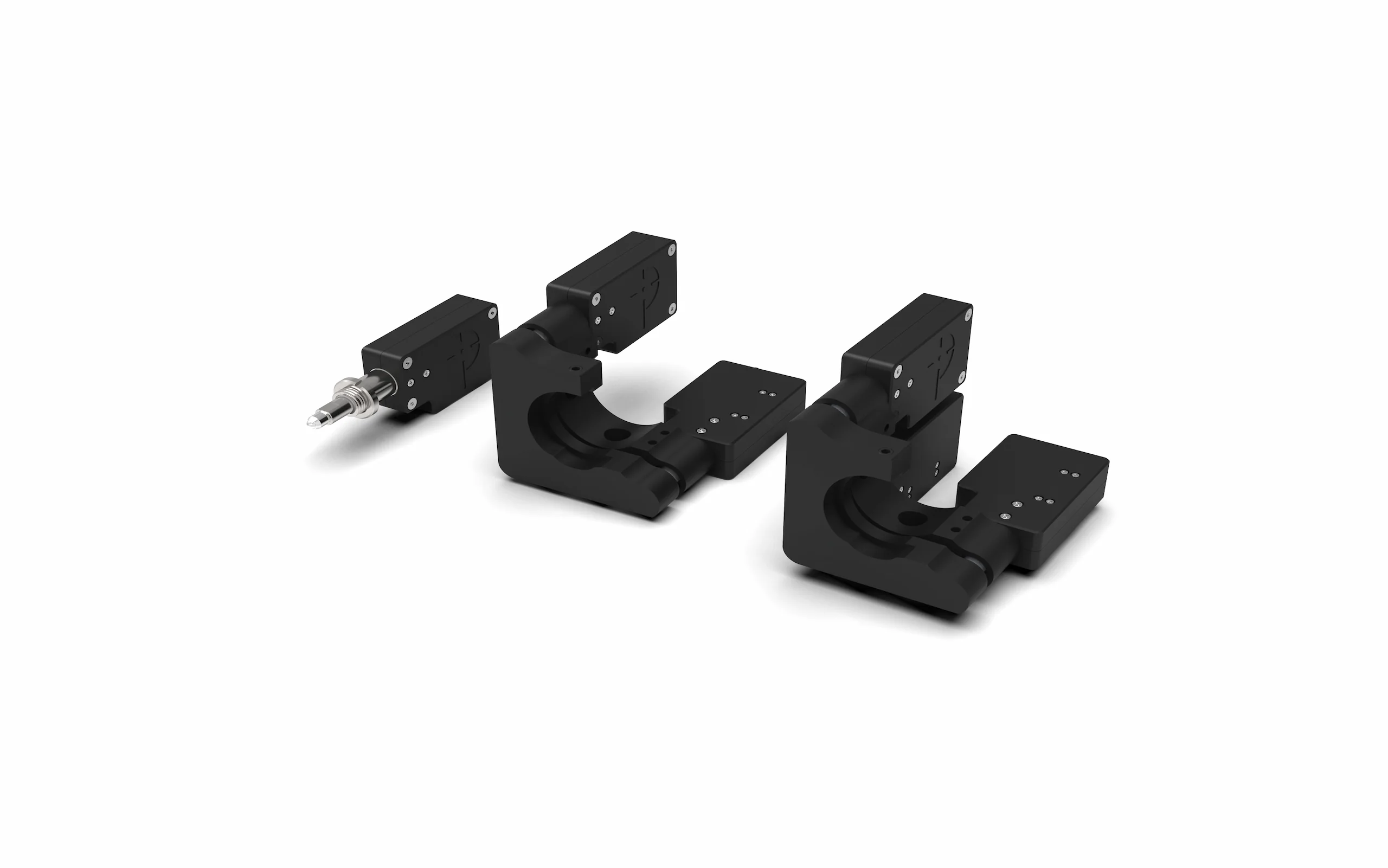
Use two or three GO actuators with compatible mirror mounts for adjustment around the X and Y axes. Changing mirror angle changes the reflected beam direction for laser beam steering and alignment.
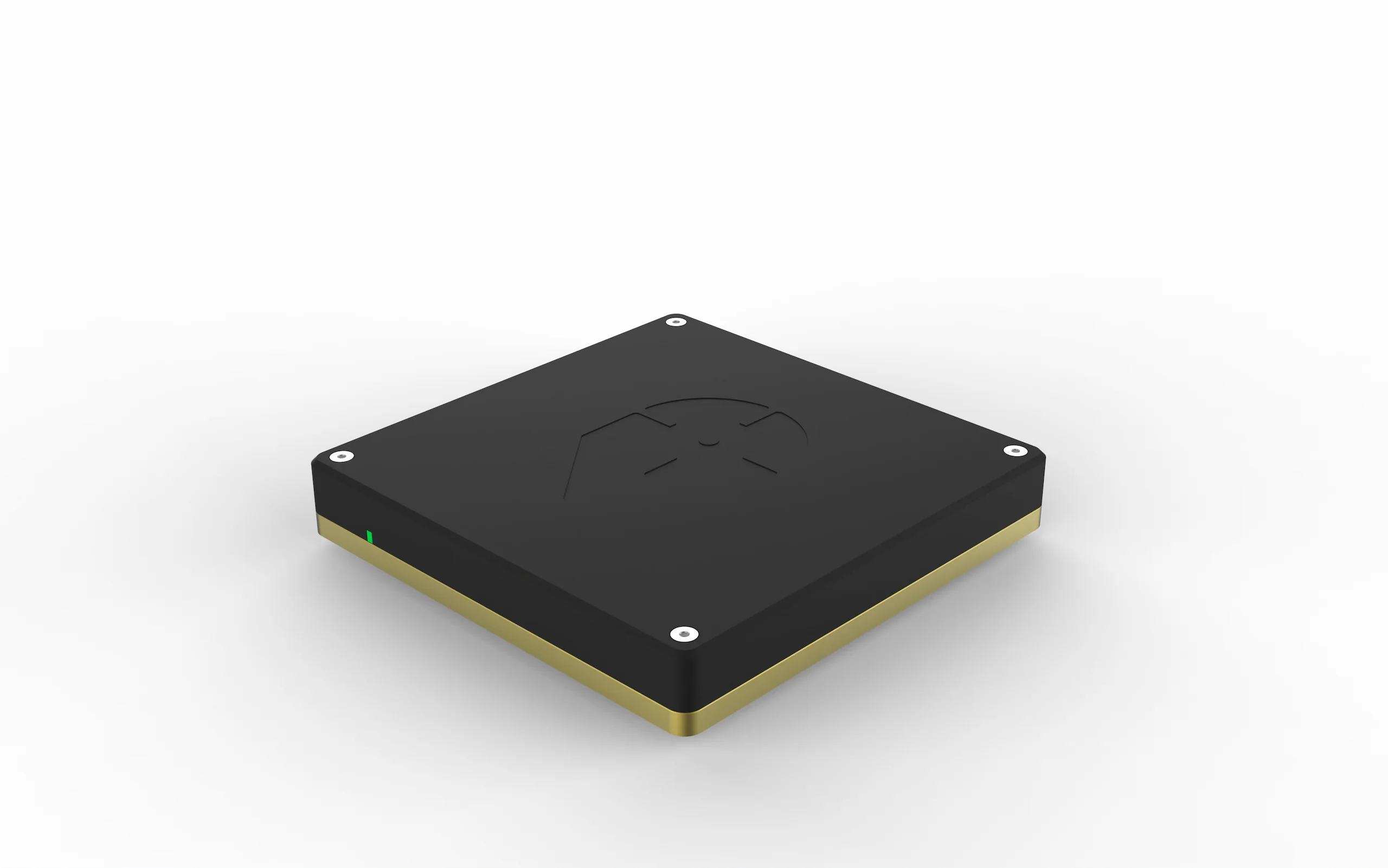
A GO Controller is required. Two daisy-chained controllers support six axes through one computer connection.
Connect over USB and choose GO Motion, GO Command, Precibeo ASCII Rapid commands, LabVIEW drivers or GO DLLs. The optional GO Joystick provides manual positioning alongside computer control.
Combine actuators and compatible GO stages within the same control system to bring optical adjustment and sample positioning together.
Plan the number of axes, controller channels, mechanical interfaces and software integration as one system.
High vacuum
10⁻⁴ Pa
GO-ACT1HV brings the same motion capability to environments down to 10⁻⁴ Pa. Its 0.5 m vacuum-side cable uses PTFE-coated wires within a braided metal sleeve and terminates in a female D9SUB connector.
The supplied 2 m air-side cable connects your compatible D9SUB chamber feedthrough to the GO Controller outside the chamber.
Match the 9 mm stroke, loaded speed and 10 N operating force to your mechanism.
Compare minimum incremental motion and repeatability alongside sensor resolution.
Check the mounting interface, contact arrangement, available space and load direction.
Select standard or HV construction and plan any chamber connections.
Include the controller, software interface and number of axes.
Your questions
No. The 2 nm figures describe sensor resolution and minimum incremental motion. Typical bidirectional repeatability is ±200 nm over full travel. Assess the complete mechanism against your positioning requirement.
PZT means lead zirconate titanate, a piezoelectric ceramic used in many actuators. The term identifies a material; travel, force and positioning behavior also depend on the actuator’s drive design and feedback.
For a piezo stack, blocking force is the force generated when expansion is fully prevented. GO specifications distinguish operating force during motion from holding force with power off: both are at least 10 N.
Yes, where the mounting interface, available space, stroke and contact geometry are compatible. GO actuators provide a 9.5 mm clamping shank or M9 thread; share your mount drawing with us to assess the fit.
Both versions provide the same operating-force and loaded-speed specifications. Choose according to the operating environment, then match the actuator to your mechanism’s force requirement.
Discuss your custom actuator requirements
Share your required travel, force, orientation, loaded speed, positioning performance, mounting arrangement, environment and number of axes. We will assess how GO actuators, controllers and integration components fit your design.
Email info@precibeo.com
or call +46 18 700 13 40